HR in 2026 is changing fast
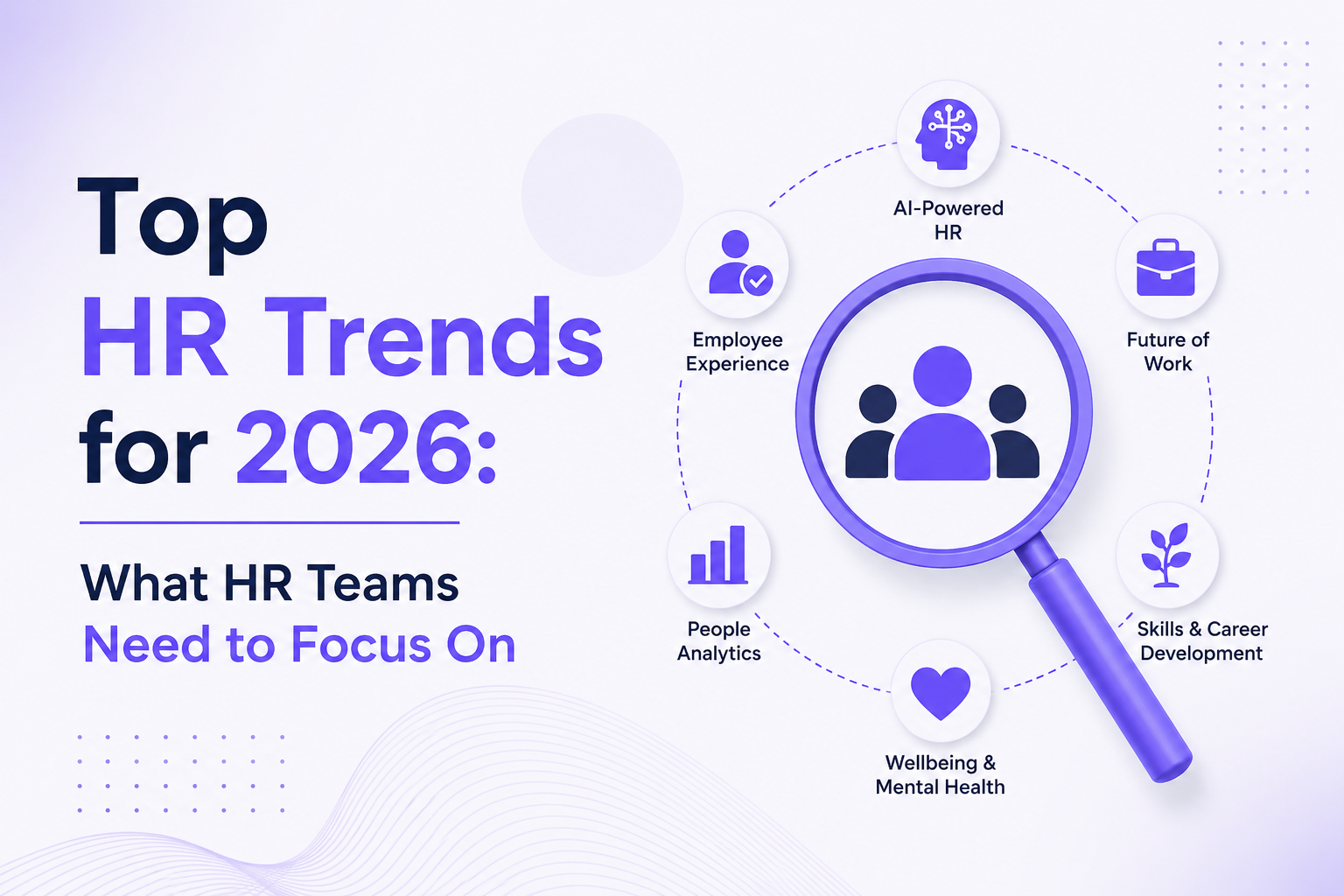
HR teams are under more pressure to hire well, retain talent, and support employees with fewer resources. The biggest shift is the growing use of AI, along with a stronger focus on skills-based hiring, better manager support, and more data-led decisions. SHRM’s 2026 AI in HR report says organizations measure AI success mainly through productivity, cost savings, better decision-making, and employee satisfaction.
1) AI is now part of daily HR work
AI is no longer limited to large enterprises. It is being used in recruiting, scheduling, onboarding, employee support, and internal communication. AIHR’s 2026 HR trends report says AI is already changing decision-making and employee development.
- Screening candidates faster.
- Reducing time spent on repetitive HR tasks.
- Improving response time for employees.
- Supporting managers with better insights.
The main point is simple: AI should save time, but HR still needs human review for key decisions. shrm
2) Skills-based hiring is growing
Many companies are moving away from hiring only by degree or job title. They are paying more attention to actual skills because that helps fill roles faster and opens the door to a wider talent pool. AIHR highlights the shift from headcount to skill count as one of the major HR priorities for 2026.
- Focus on what a candidate can do.
- Match people to roles based on ability, not just background.
- Support internal growth and mobility.
- Reduce hiring gaps in hard-to-fill roles.
This approach is practical and better suited to a changing workforce.
3) Workforce planning is becoming more data-led
HR teams are expected to make better decisions with data, not instinct alone. Workforce planning now includes forecasting hiring needs, spotting retention risks, and understanding where skills gaps are forming. Visier’s 2026 workforce trends note that workforce planning is becoming a critical capability, not just a side task.
- Track turnover before it becomes a bigger issue.
- Plan hiring based on business needs.
- Identify teams that need support.
- Use people data to guide decisions.
This helps HR stay ahead instead of reacting late.
4) Employee experience still matters
Employee experience is not just about perks. It includes how people are hired, onboarded, managed, and supported every day. Robert Half notes that personalized onboarding and predictive retention analytics are becoming more important in 2026. roberthalf
- Make onboarding simple and clear.
- Give employees fast access to support.
- Improve communication across teams.
- Use feedback to fix problems early.
A better employee experience can improve retention and productivity.
5) Managers need more support
A strong manager can improve team performance, but weak managers can create turnover and confusion. In 2026, HR teams are paying more attention to manager training, especially as teams become more hybrid and fast-moving. Visier says the manager experience is becoming the new employee experience.
Train managers to give clear feedback.
- Help them handle performance issues early.
- Support them in leading mixed teams.
- Make sure they understand people goals, not just business targets.
If managers are not supported, HR efforts often lose impact.
6) Automated recruitment software is becoming essential
Hiring is still too manual in many teams. Resume screening, candidate sorting, and first-round filtering take time and slow down the process. That is why automated recruitment software is becoming more important in 2026. VeriHire simplifies the recruitment process with AI-driven software, making hiring easy and efficient.
- Reduce manual screening work.
- Organize candidate data faster.
- Improve speed in shortlisting.
- Help recruiters focus on better hiring decisions.
VeriHire takes the load off HR teams so they can focus on what truly matters: building a great team.
What HR teams should do now
The best response is not to do everything at once. Start with a few practical changes that can show results quickly. AIHR’s 2026 guidance suggests co-leading AI transformation, reinvesting time saved into growth, and building AI fluency as a core HR capability.
- Pick one AI use case and test it.
- Review hiring criteria and add more skill-based filters.
- Improve onboarding for new joiners.
- Train managers with simple, practical tools.
- Use data to spot problems early.
These steps are realistic and easy to apply without adding extra complexity.
Final note
HR in 2026 is about moving faster, using data better, and focusing more on skills than labels. The teams that adapt early will be better placed to hire well, keep talent, and support business growth.